
grp conduit
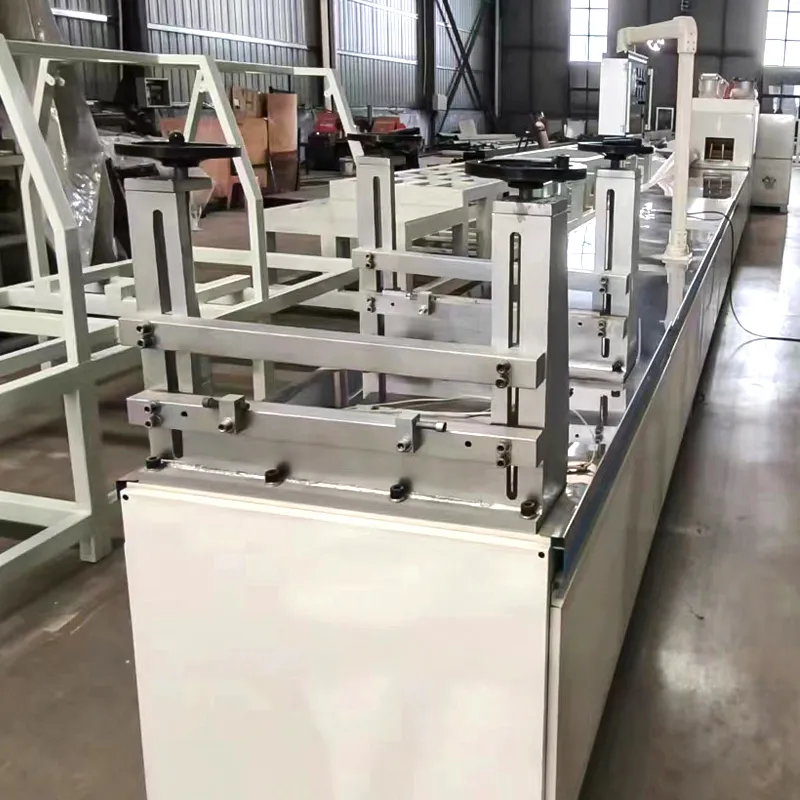
Inside the FRP boom: a practical look at the frp pultrusion machine If you’ve walked a wastewater plant catwalk or checked a cable tray near the coast, chances are you’ve met pultruded FRP—quietly doing its job. The manufacturing backbone is the frp pultrusion machine , and this particular line from Hebei has been turning heads for being pragmatic rather than flashy—PLC control, LCD, hydraulic reciprocating traction, pneumatic fixed-length cutting. I spent a day on site; the operators liked that it “just keeps pulling.” What’s trending in pultrusion Three shifts, more SKUs, stricter audits. Demand for corrosion-proof profiles for energy, water, and telecom is up, and auditors keep asking for EN 13706 and UL 94 evidence. Automation is creeping in—sensors on resin viscosity, closed-loop pull control—and, to be honest, that’s overdue. The Hebei unit keeps it sensible: PLC + stable hydraulics over gimmicks. Many customers say that’s why downtime is low. Core architecture Creel → dipping tank → preforming guides → heated die table → reciprocating tractor → pneumatic saw → support rack → control. With the right molds, you’ll run I-beams, angle, square/round tube, cable troughs, rods, hollow panels, bridges—switchovers are surprisingly quick once the crew learns the die setup routine. Typical machine specs (real-world values may vary) Control PLC + LCD HMI Traction Hydraulic reciprocating, ≈30–60 kN Line speed ≈0.2–1.5 m/min adjustable Cutting Pneumatic fixed-length saw, ±1.5 mm Heated die zones 2–4 zones, 120–160 °C (electric/thermal oil) Max profile width ≈300 mm (custom molds available) Installed power ≈25–45 kW Air requirement 0.6–0.8 MPa Process flow, materials, and testing Reinforcement: E-glass roving/mats; surface veil for corrosion class. Resins: Orthophthalic/vinyl ester/epoxy; fillers; pigments; MEKP or BPO; release agent. Method: Preforming guides align fibers → heated die cures → hydraulic pull → pneumatic cut. QC: Dimensions (EN 13706), tensile (ASTM D638), flexural (ASTM D790), Barcol (ASTM D2583), water absorption (ASTM D570), dielectric (ASTM D149), UV (ASTM G154), salt spray (ASTM B117). Fire: UL 94 V-0 formulas available. Indicative profile data (vinyl ester, 65% glass): tensile ≈600 MPa; flexural ≈800 MPa; Barcol ≈45; dielectric ≈20 kV/mm; density ≈1.8 g/cm³. Field life: 25–30 years with UV topcoat, though coastal exposure can nudge maintenance earlier. Applications and advantages Cable trays, ladder rails, I-beams for platforms, handrails, bridges, telecom brackets, utility crossarms, cooling tower components. Benefits: corrosion resistance, electrical insulation, low mass, low thermal conductivity, and—surprisingly—quiet operation on the line, which operators appreciate during night shifts. Vendor snapshot (quick comparison) Vendor Control/Drive Cutting Certs Lead time After‑sales Price Hebei Line (this unit) PLC + hydraulic reciprocating Pneumatic, ±1.5 mm ISO 9001, CE (on request) ≈6–10 weeks Remote + on‑site startup Mid EU Premium Servo + closed loop Servo flying cut ISO 9001/14001, CE ≈12–20 weeks Full lifecycle SLA High Budget Local Basic hydraulic Manual stop‑cut Limited ≈4–8 weeks Ad‑hoc Low Customization (where the ROI usually hides) Molds: angle/I-beam/box/rod/tube; quick-change preformers. Resin packages: corrosion-grade vinyl ester, low smoke/halogen‑free; fire performance to UL 94 V‑0. Heating: electric or thermal oil; added zones for thick sections. Automation options: resin temp/viscosity monitoring, pull force logging, recipe management. Case notes from the floor Case A—Coastal utility: swapped steel cable trays for FRP profiles. Line speed stabilized at 0.9 m/min; scrap fell from 6% to 2.1% after die tuning; salt-spray panels passed 1,000 h with no blistering (ASTM B117). Payback ≈14 months. Case B—Ladder manufacturer (EU): added a second frp pultrusion machine with identical die set; doubled output without re-training. Tensile coupons averaged 620 MPa (ASTM D638 Type I), Barcol 46; management liked the “boringly stable” shift reports. Compliance, service life, and support Profiles designed to EN 13706; factory runs ISO 9001 routines; optional CE marking and RoHS statements. With UV topcoat and corrosion-grade resin, expect 25–30 years in industrial atmospheres; check local fire codes if going indoors near occupied spaces. Origin: No. Room 211,706 Xinghua North Street, Jizhou District, Hengshui City, Hebei Province. Customers mention responsive remote support; I guess that’s why repeat orders keep happening. Quick customer remarks “Cut accuracy held within ±1 mm after warm‑up.” “Die change took under 45 minutes after week two.” “Energy use was lower than our press line—pleasant surprise.” References EN 13706: Pultruded profiles — Specifications and test methods. ASTM D638, D790, D570, D149, D2583, B117; UL 94; ASTM G154. ISO 9001 Quality Management; CE marking guidance for machinery. ISO 14692 (composite piping) for corrosion-grade resin selection context.

-
 Product CustomizationWe offer tailored solutions to customize product sizes, shapes, and packaging according to your specific requirements, ensuring the perfect fit for your needs.
 -
 Quality ManufacturingWith state-of-the-art facilities and ISO CE and RoHS certifications, we guarantee top-quality production, maintaining high standards throughout every stage.
 -
 Technical SupportWe provide expert technical support, including design modifications, drawing adjustments, and remote guidance to optimize equipment performance.
 -
 24/7 Online SupportWe provide round-the-clock online assistance, ensuring prompt responses to your inquiries and addressing any concerns to keep your operations smooth.